

What makes a good steak? The simple answer is beef marbling. But what exactly is marbling, how do you get it, and how do you find the best marbled steak?

What makes a high quality steak? The simple answer is beef marbling.
From five-star executive chefs to USDA-meat inspectors to backyard grill afficinados, everyone knows beef marbling can make-or-break a good steak. But what is a “well-marbled” steak and how do you get it?
What is Beef Marbling?
Beef marbling is small threds of intramuscular fat interspersed within beef between the muscle fibers. The fine white flecks running through the red meat look somewhat like a marble pattern, hence the name.
Marbling is what’s called intramuscular fat, which is the white fat streaks inside the meat. Marbling is not intermuscular fat, which is fat on the outside that you typically trim off. An example of intermuscular fat is the layer of fat on the outside of a strip steak.
Why is a marbled steak important?
Marbling is what gives beef richer flavor, juiciness and tenderness. When cooking, marbling adds a buttery flavor and juiciness as the fat melts into the steak. The marbling keeps the meat moist, so natural juices don’t evaporate in the pan.
Beef marbling is also one of the most important elements of how the USDA grades beef.
If beef marbling is fat, is it healthy?
The type of fat that is considered marbling is unsaturated fat, which is an important part of a healthy diet. Marbled meat also contains oleic acid, which is also found in things like olive oil.
Why does beef marbling make beef taste so good?
Scientists have studied why marbling helps beef’s tenderness and they have lots of theories. Some say it’s because fat doesn’t conduct heat as well as lean fibers, so a well-marbled piece of beef is harder to overcook. Another theory is that marbling makes it easier to chew beef, so the person eating the beef perceives the beef to be tenderer.
We recommend putting the science aside and do your own taste test. See what your taste buds like the best. Cook a cut of meat with a lot of marbling, like a rib-eye, and compare it to a steak witho less marbling, like a round steak.
Which steak is more tender, juicy and flavorful to you? The rib-eye wins the flavorful, juicy steak competition. Every. Time.
Beef marbling and Grades of beef
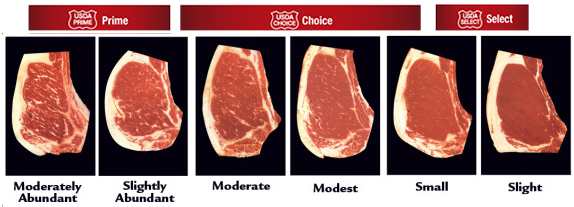
The USDA has an in-depth meat grading system, and they employ hundreds of beef graders that evaluate beef and determine the grade, including the amount and distribution of fine marbling. Per the USDA guidelines, beef grading looks at the amount of marbling in the ribeye muscle between the 12th and 13th ribs. Based on that one location of the cow, they assign an overall quality grade and know if the beef in the entire cow is Prime, Choice or Select.
Beef Grades – Prime, Choice, and Select – have a direct correlation to its beef marbling score. In the United States, the steaks with the highest quality grades are those with the exceptional marbling.
When beef is cooked, the degree of tenderness is mostly dependent on the amount of fat marbling in the meat. USDA Prime beef has the highest grade or fat content, followed by USDA Choice. Last is USDA Select and it has only slight marbling.
What about Japenese Wagyu Cattle
Wagyu is a word that translates to “Japanese cow” — “wa” means Japan and “gyu” means cow. It refers to four specific breeds of Japanese cattle: Japanese Black, Japanese Brown, Japanese Shorthorn, and Japanese Polled.These cattle breeds are genetically bred to have a higher degree of marbling in the meat. Thanks to the marbling, it’s an incredible tender and juicy steak. When shopping for Wagyu steak, you want evenly distributed marbling throughout the meat, which indicates a higher fat content that melts during cooking. Japanese Wagyu beef grades are on a scale from A1 to A5, with A5 being the highest grade.
What affects marbling?
There are different factors that affect marbling, including the breed of cattle, diet, and age of the animal.
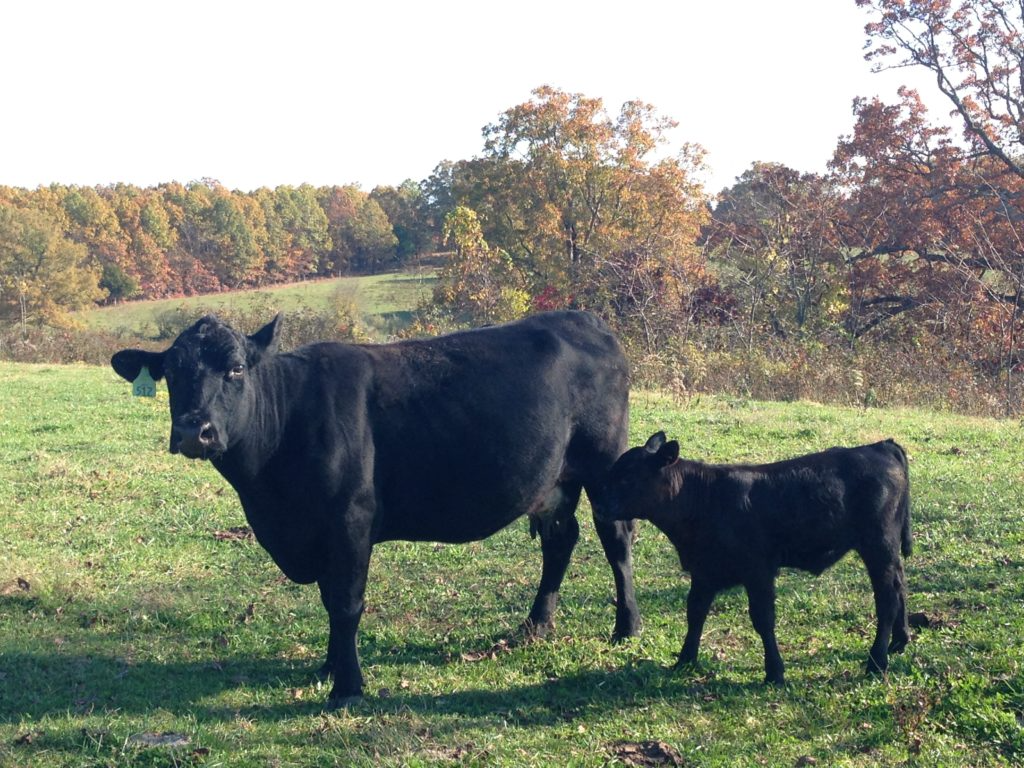
Breed: Certain cattle breeds are known to have higher marbling scores than others. Angus is one of the breeds that has more consistent marbling, and that’s what we raise on our farm.
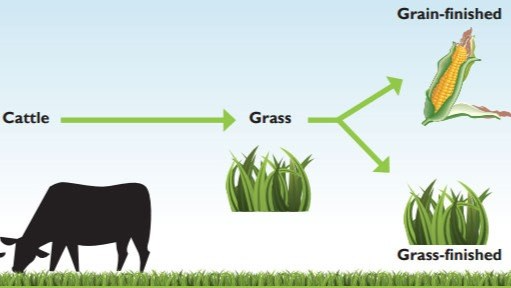
Diet: On our farm we feed cows in two basic ways: grass finished and grain finished. Cattle that feed on grain often marble more easily than strictly grass-fed cattle, which are typically leaner. As a side note, we eat a lot of steak, but we have yet to see a Prime steak that is also grass finished. Because grass finished beef is leaner, it doesn’t meet the USDA’s qualification for Prime.
Age: The age of an animal is very important. If it’s too young, it won’t have had time to develop intramuscular fat yet. If the animal is old, it’s lean and tough. That’s why we butcher animals at very specific times on our farm.
Muscle usage: The less a muscle gets worked, the more fat is present and thus results in the cuts with the most marbling. As we’ve talked about before, beef gets more tender as the distance from horn and hoof increases. The loin and ribs are at the center of the animal, and they don’t work much so they’re very tender cuts.
What cuts of beef have the most marbling?
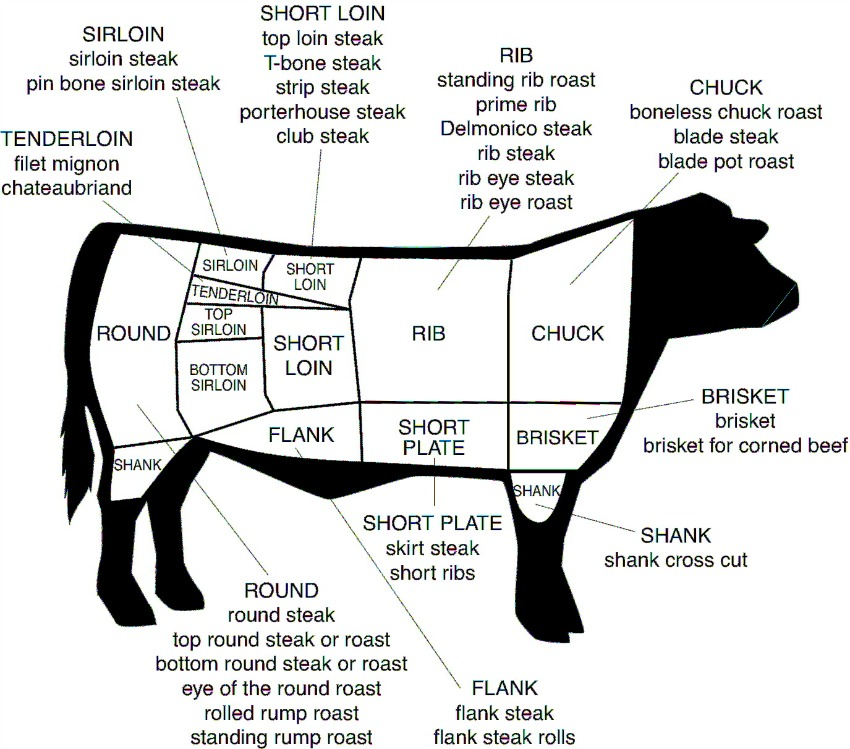
The most marbled beef is from muscle groups that are used the least, which are on the top of the steer.
The ribeye steak has the most abundant marbling of any cut. It’s cut from the rib section, and steak lovers around the world rave about it because it’s so tender and juicy. And yes, all of that mouth-watering-goodness can be attributed to the marbling.
If you look for a rib-eye on a restaurant menu, you should know that rib-eyes are a boneless cut and it’s sometimes refereed to as a Delmonico. You could also have a bone-in ribeye, and that will usually be called a cowboy rib-eye or rib steak.
Boneless steaks should have marbling throughout the entire cut, and they may also have a rind of fat. The marbling on a bone-in cut should move cross-wise through the meat and there should be a thicker strand near the bone.
Here’s a glance at other popular steak cuts:
- A Tenderloin Steak, or Filet Mignon, is the most lean, tender cut of beef, but it has less marbling than many steaks. It is melt-in-your-mouth tender, but it’s not as flavorful as other cuts of beef.
- A Strip Steak is a steakhouse classic and an all-around favorite. It has mild marbling, and great tenderness and flavor. Strip Steaks are lean with a fine, tight grain that makes them moderately tender.
- A T-Bone Steak is a combination of two steaks – Tenderloin and Strip – and the t-shaped bone is what divides the beefy strip and tender tenderloin.
One more thing!
Do you want to learn more about beef? Below are a few popular beef posts and recipes you may like. In addition, we have an entire ebook about beef that goes through purchasing and preparing beef from a farmers perspective.
- What everybody ought to know about beef cuts
- Buying a Cow. How Much Beef Is It?
- Is It Done Yet? The Best Meat Thermometer
- How We Raise Our Grass-Fed Beef
Don’t forget!
We have a weekly e-newsletter where we share farm happenings, recipes, and when our next beef will be available. When you sign-up, you’ll also get a cheat sheet with 9-must-ask questions before buying beef directly from a farmer.
We participate in the Amazon Services LLC Associates Program, an affiliate advertising program designed to provide a means for us to earn fees by linking to Amazon.com and affiliated sites. See our disclosure policy for more details.


